
Ignore it
The smell keeps coming back every time the unit switches to heat, and whatever is growing on that coil keeps spreading each time warm air moves across it.
 Hand it off
Once you send the form, finding a pro is off your list.
A mini split that smells when it's heating is telling you something is sitting in the air path that shouldn't be there. Most homes in California heat with gas, so the mini split often sits idle for months until the weather turns, and whatever has settled in the coil or the blower wheel over that time shows up as smell the moment warm air starts moving again.
A musty smell usually means moisture got into the unit while it sat unused, enough for mildew to grow on the coil or in the drain pan. A burning smell is different and worth taking seriously, since it can point to dust baked onto a hot component or to a wiring issue inside the unit. Either way, the smell is a symptom, not the problem itself, and running the unit less isn't going to clear it.
With power costs here among the highest in the country, you don't want to be running a mini split that's working harder than it should because of a dirty coil or blocked airflow. That same buildup that's causing the smell is often costing you on the bill too.
This isn't something to chase down on your own. A technician who works on mini splits all year in California has seen this exact complaint before and knows where to look first, whether that's the indoor coil, the drain line, or something electrical that needs a closer eye. Send your information through and the search for the right person to look at it is no longer something you have to manage. One licensed, local contractor gets your request, not a handful of companies competing for your callback. You can stop thinking about it and let the next step come to you.
You turned the heat on and the mini split pushed out a smell, maybe musty, maybe like something burning off. It wasn't there a minute ago and now it's filling the room. You want to know if this is the unit failing or just something that happens when a mini split switches modes after sitting unused.
A mini split that heats with gas elsewhere in the house often sits on cooling duty only, so the heat strip or heat pump coil goes untouched for months. Dust settles on it. Moisture collects in the housing. When you switch to heat, that coil warms up and burns off whatever landed there, and that's the smell reaching you. If it fades within ten or fifteen minutes and doesn't come back, the unit is fine. If it lingers past that, or shows up every time you run heat, something is sitting in the air path that isn't clearing on its own, and that's worth having looked at before it gets worse.
The indoor coil sits damp and unused for months once gas heat takes over.
Dust and skin cells settle on that damp coil and start growing mold.
Switching to heat pushes warm air across the coil and the mold.
That airflow carries the musty smell straight into the room.
You'll smell it first in the room with the mini split, then maybe down the hall once the air starts moving. It can be musty, like a closet that never gets opened, or sharper, like dust burning off a stove coil. Sometimes it fades after a few minutes as whatever settled on the coil clears out. If it keeps coming back every time you switch to heat, that's mold or dust rebuilding on the coil each time it sits idle. Left alone, it's not just the smell. Mold on a coil that's blowing into your living space is something worth dealing with, especially if anyone in the house has allergies or breathing issues.


A mini split that only smells when it switches to heat is one most places leave alone for months at a time. Gas carries the heat load in most California homes, so the unit sits idle, the coil stays damp, and nothing moves through it until the first cold snap asks it to. By then whatever grew on that coil is waiting to ride the airflow into your room. Clearing it means opening the unit and cleaning the coil itself, not just running a filter change or waiting for the smell to fade on its own, since it won't. A contractor who services mini splits in California all year has seen this exact complaint arrive every fall and knows what the coil looks like before they get there. Send the request and it goes to one licensed local contractor, not a handful competing for your callback, so you're not fielding five calls to explain the same smell five times. From there it's off your plate.
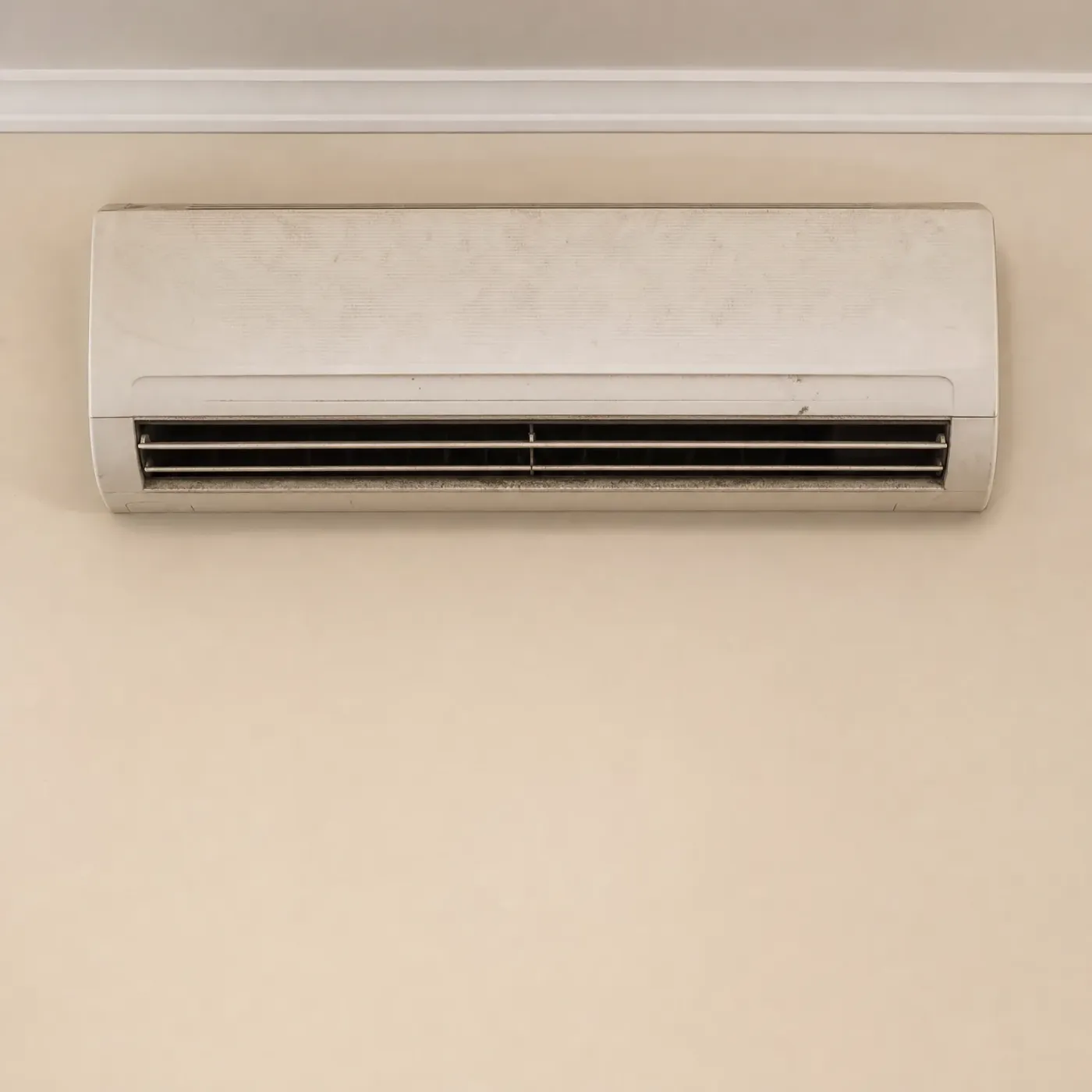

Once the mold and dust on the coil burn off or wash away in the condensation, the smell usually drops off within the first several minutes of a heating cycle. That pattern is worth checking yourself: run the heat and see if it's strongest right at startup and mostly gone by the time the room warms up. A smell that fades that way points to buildup on the coil. One that holds steady the whole time the unit runs is more likely something else, like a clogged drain line or an electrical smell from a component overheating.
The coil doesn't stay clean on its own. Every time gas heat takes over for the stretch between uses, the mini split goes quiet and the coil starts collecting dust and moisture again. A contractor who works on mini splits through the fall knows this pattern well, because it shows up in the same way in a lot of houses the first time the heat gets switched on. Cleaning the coil clears the smell for that season, but it isn't a one-time fix. Without a look at the coil and the drain line before each heating switch, the same smell tends to show up again next year.




The smell keeps coming back every time the unit switches to heat, and whatever is growing on that coil keeps spreading each time warm air moves across it.
A local tech who works on mini splits all year can clean the coil and find out why moisture is sitting there in the first place.
At 31.35 cents per kilowatt-hour, running your mini split's blower and heat strips to chase that smell out on your own costs more here than almost anywhere else. A tech clearing the coil directly gets rid of it without you paying to move extra air through the house.
EIA-861 2025 statewide residential average
A mini split that smells when it switches to heat has a damp, dirty coil, and that's a straightforward thing to clean once someone is looking at it directly. You don't need to guess at it every winter or run the blower on high hoping it clears on its own. A local tech who works on these systems through the warm months and the cold ones has seen this exact smell before and knows the coil is almost always where it starts. Getting matched with one tech, someone local who handles mini splits all year round, means you're not fielding calls from three different companies trying to figure out who actually knows your equipment. You explain it once, to someone who already knows what usually causes it. The smell isn't a sign your unit is failing. It's a sign the coil needs attention before the mold sitting on it has another season to spread.

Only one pro gets your request, so you hear from one company.