Why your mini split blows cold air in California

Step 1 of 3: Equipment

A mini split that blows cold air when it should be heating usually means it's stuck in the wrong mode or the heat pump can't pull warmth from the outside air. Check the remote first. It's easy to bump into cool or fan mode without noticing. If the setting is right and you're still getting cold air, the system may be low on refrigerant, or the reversing valve that switches it between heating and cooling has failed. Outdoor units can also ice over in damp, cold weather, and a frozen coil will blow cold air until it thaws. Since most homes here heat with gas, your mini split may only be running on mild days, which makes a sudden cold-air problem easier to miss at first. Either way, it's not something to wait out. A unit stuck on cold while you need heat is a sign something inside it needs attention from someone who can open it up and find out what's wrong.

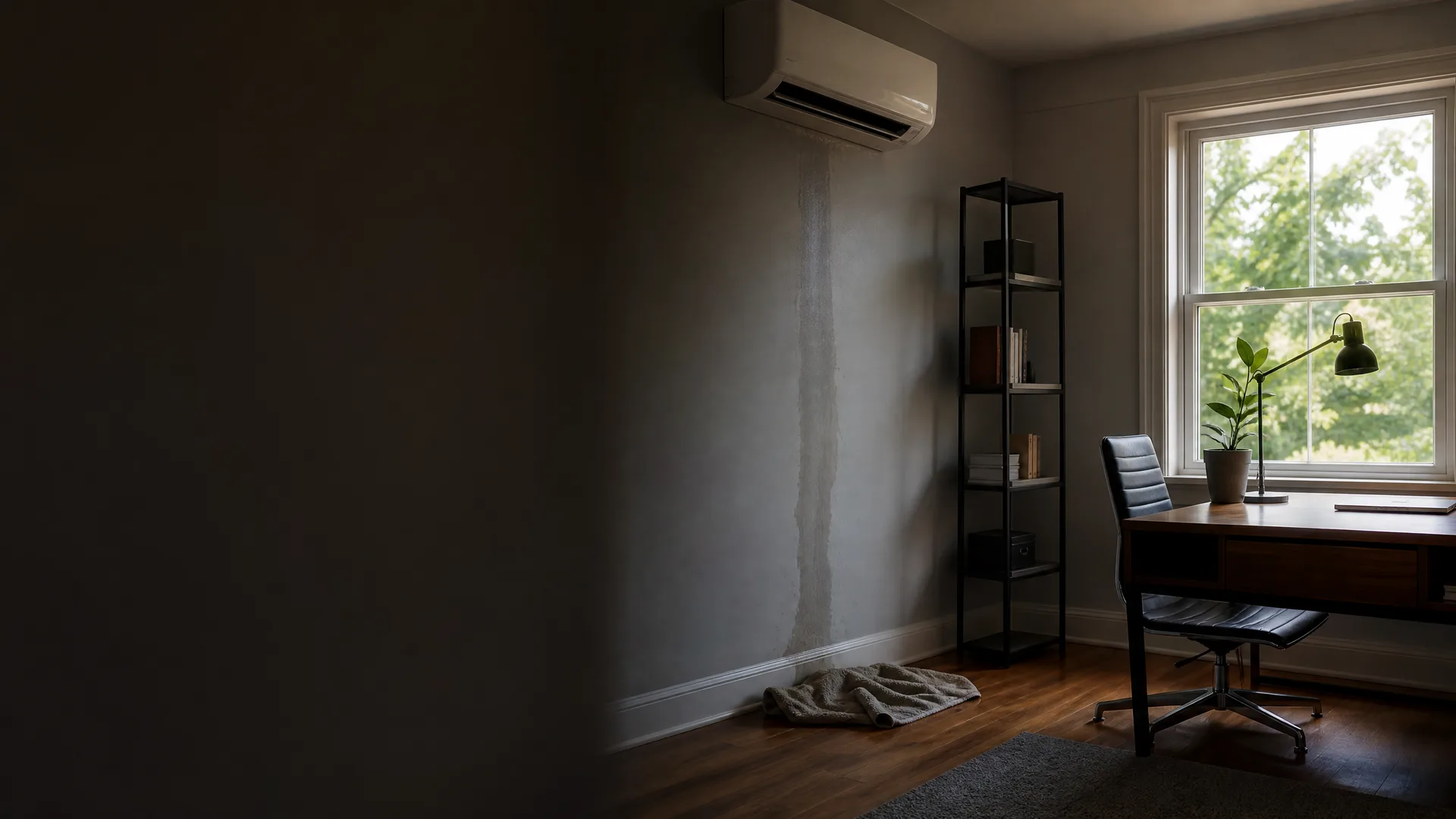
A dim room with a wall-mounted mini-split air conditioner above a water stain running down the gray wall to a towel on the wood floor, with a black shelving unit, a desk with a lamp and potted plant by a window, and an office chair at right.

You're at your desk on a warm afternoon, working, when you notice the air from the mini split feels off, blowing cool instead of warm. Then you see it: a wet streak down the wall under the indoor unit, darkening the paint. You grab a towel and put it on the floor where the water's starting to pool. The unit hums along like nothing's wrong, still pushing out air that isn't warming the room. You check the remote, the mode looks right. You stand there a second, looking at the streak, trying to figure out which problem you're actually dealing with.

Why does my mini split blow cold air during defrost mode?

In winter, your mini split pulls heat from outside air, but when it's cold and damp out, frost builds up on the outdoor unit's coil. The system has to clear that off or it stops working altogether. You notice the indoor air turn cool right in the middle of a heating cycle and wonder if something's broken, when really the unit is doing something it's built to do.

It's clearing frost off the outdoor coil, and cold air for a few minutes is normal

The outdoor unit reverses itself for a few minutes, running like an air conditioner so hot refrigerant melts the frost off its coil. That's what sends cool air through the indoor unit while it happens. You'll usually see the outdoor fan slow or stop and maybe steam rising off the coil as the frost lets go. A defrost cycle like this runs maybe ten minutes at most, then the system switches back and warm air returns. It's worth a call if the cool air lasts well past that, if defrost cycles are happening every hour or more, or if the outdoor coil stays packed with ice instead of shedding it. That points to low refrigerant or a failing sensor, not normal defrost.

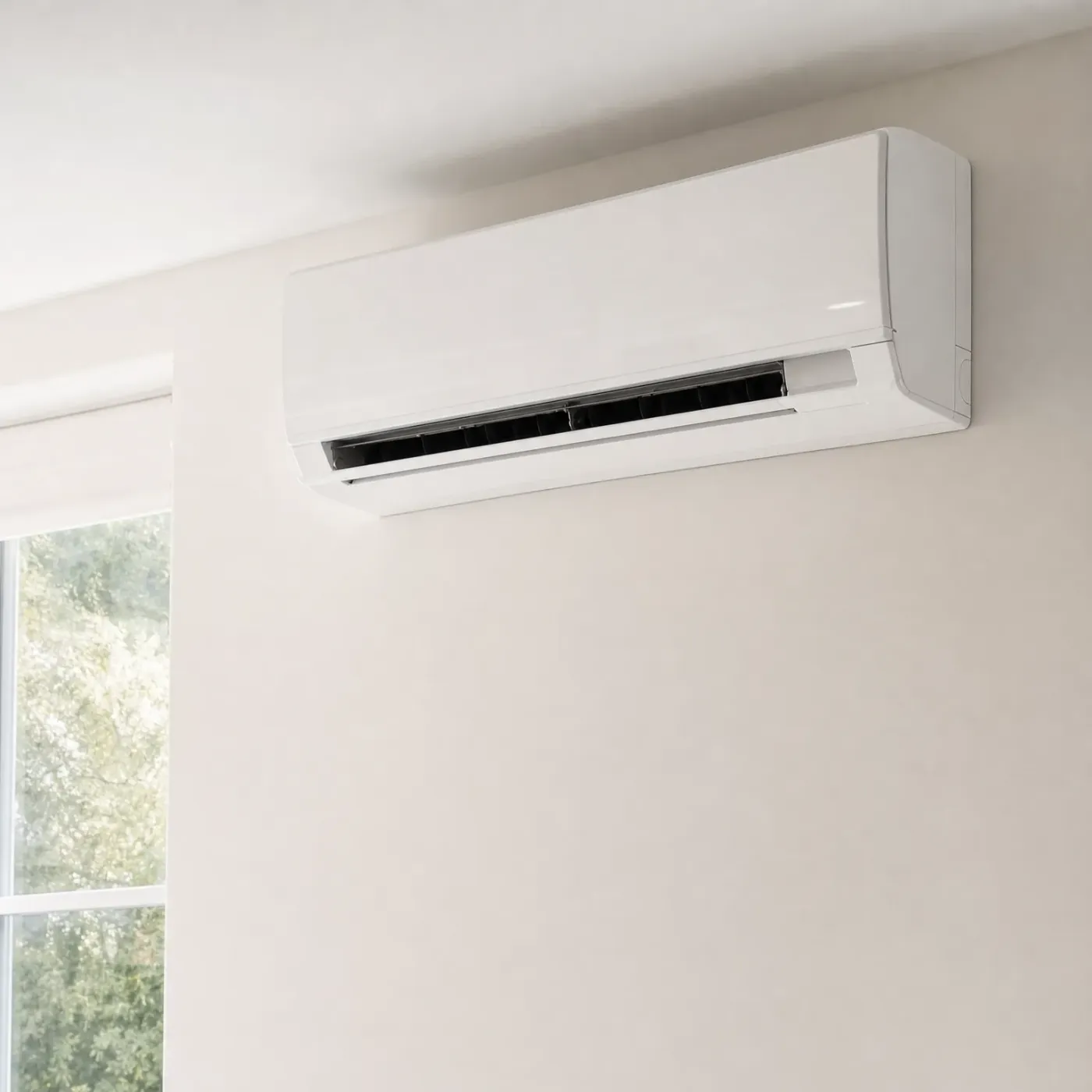
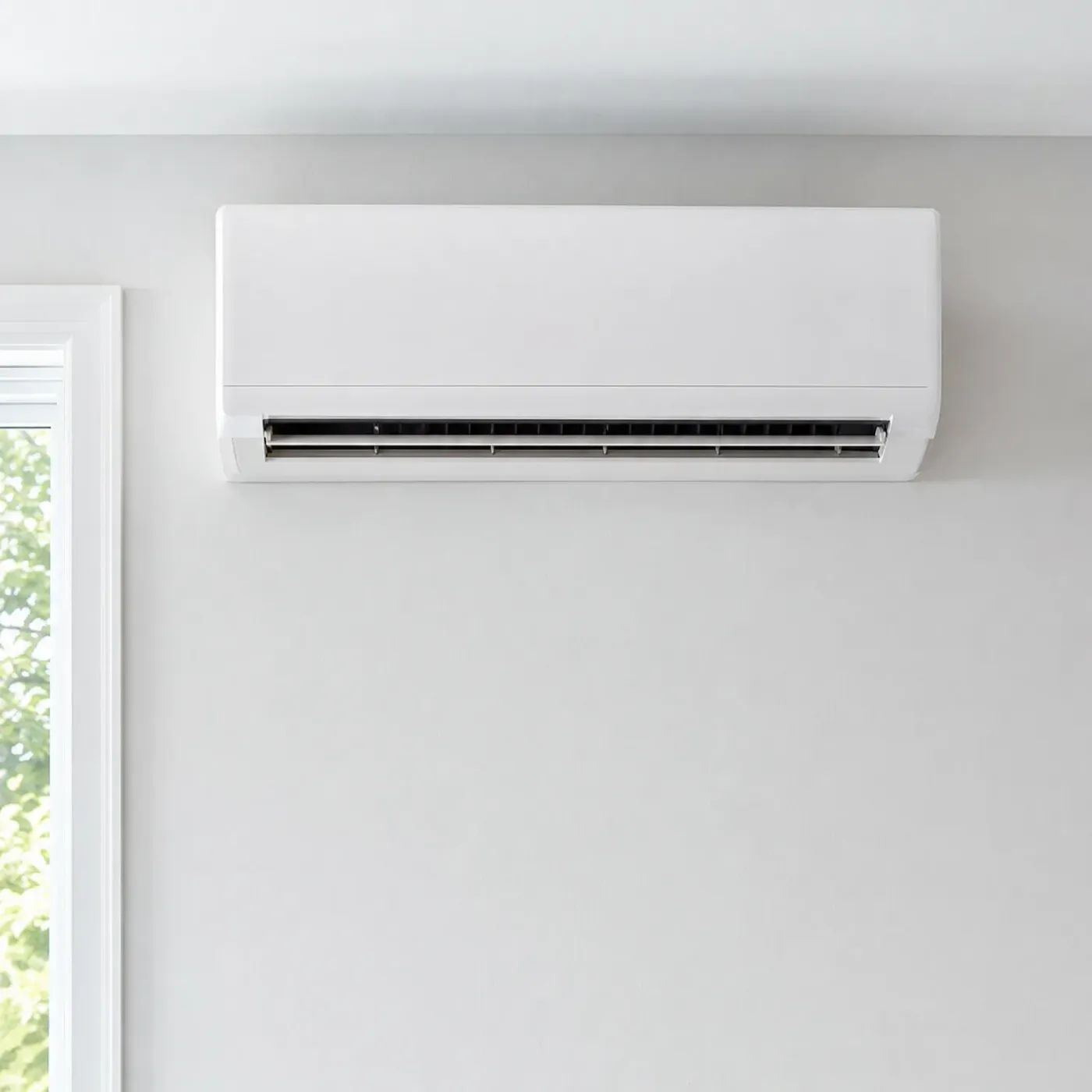
A white wall-mounted mini-split air conditioner unit installed high on a light gray interior wall near the ceiling, with a white-framed window and green foliage visible at the left edge.

Running the way it should

Air moves steadily from the indoor unit, warm when you've set it to heat, cool when you haven't. The remote setting matches what you feel on your skin. No streaks on the wall below it, no ice visible on the outdoor unit. It responds when you change the temperature and holds it.
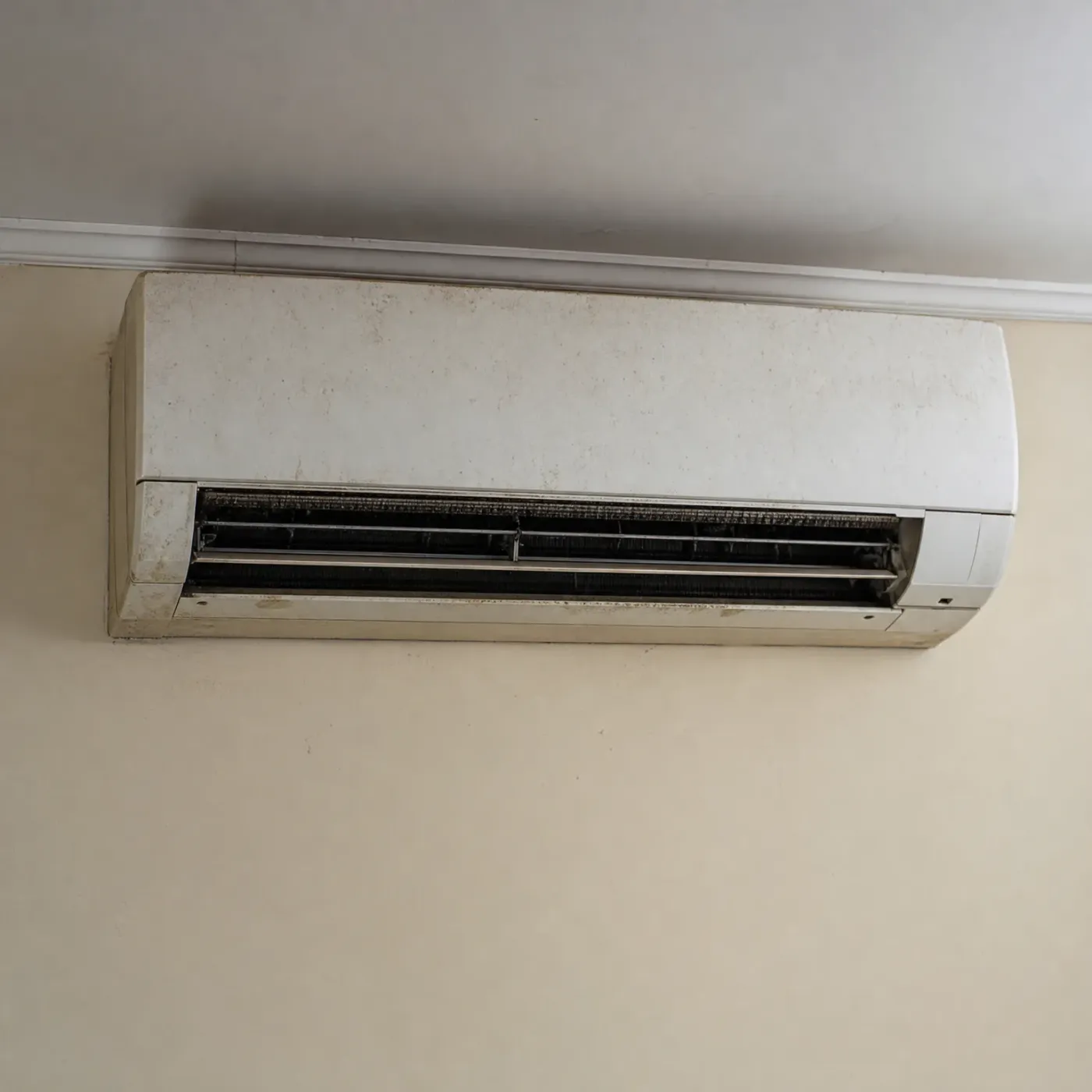

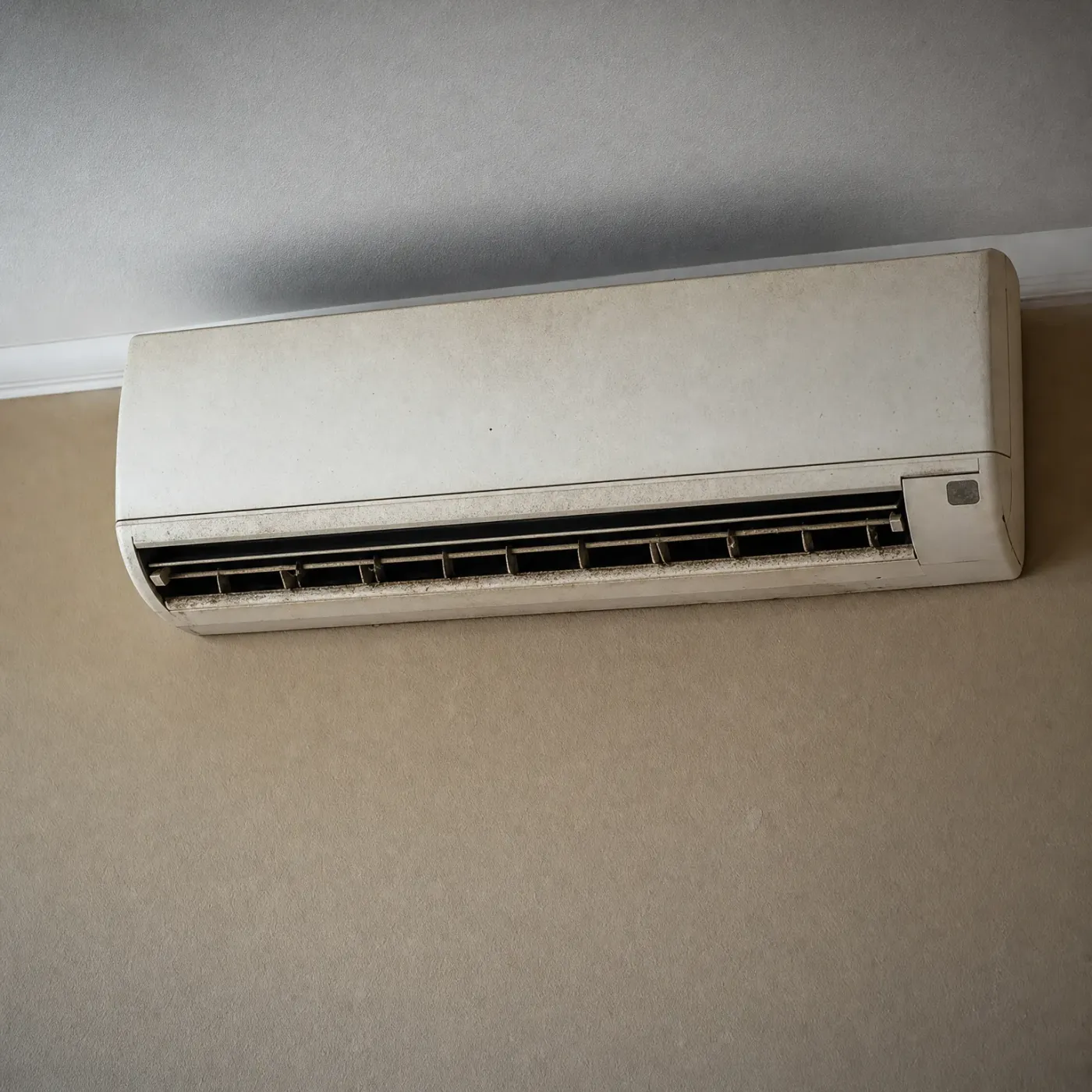
A dusty white wall-mounted mini-split air conditioner installed high on a beige interior wall below a molded ceiling trim.

Signs something's wrong

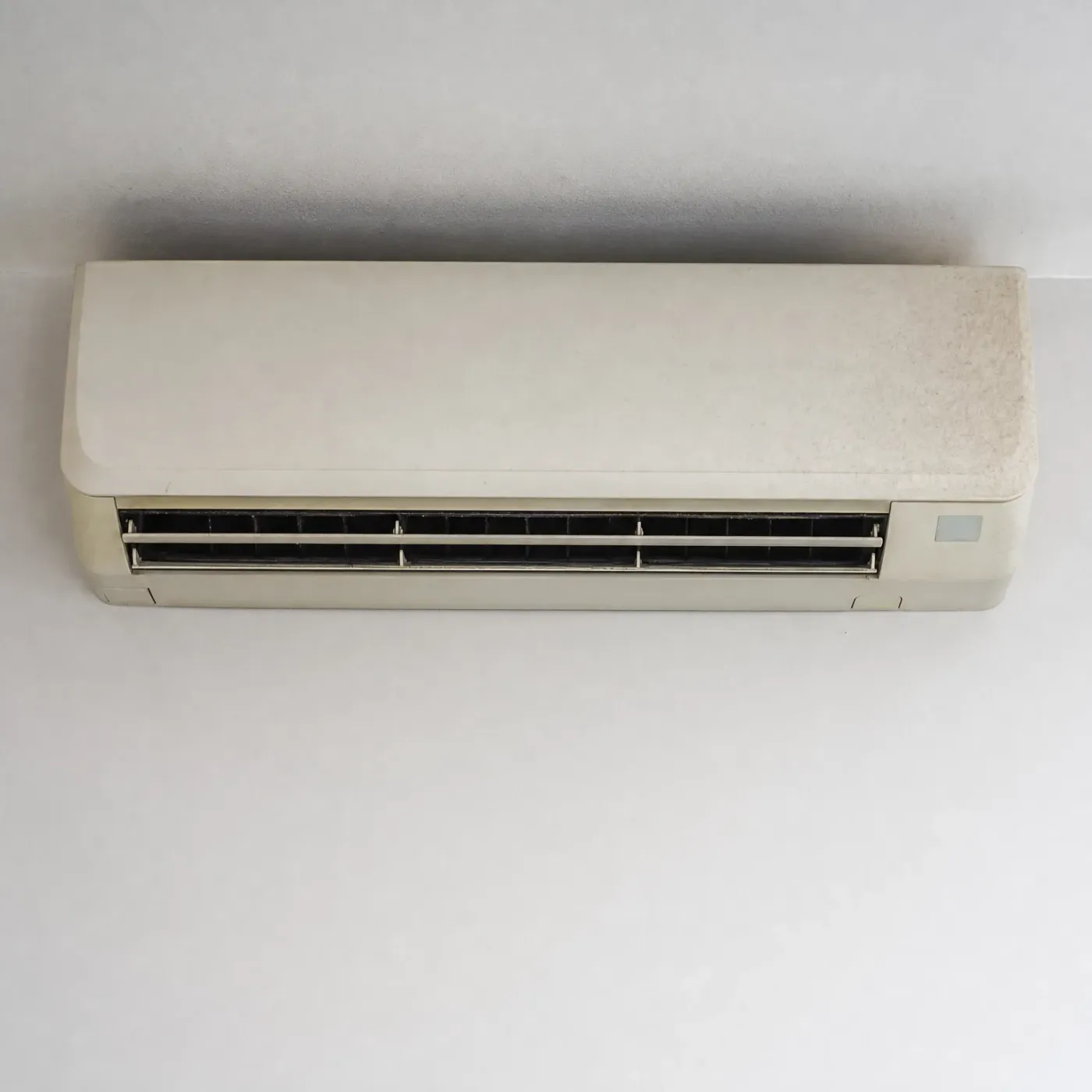
The panel sits open or won't close right, and dust coats the casing and vents. Air comes out weaker than it should, or runs cold when you asked for heat. A filter caked like that restricts airflow enough to throw off how the whole system reads the room, which is worth having a licensed tech look at.

Is this worth paying attention to in your house

You've probably noticed the thermostat says heat but the air coming out feels no warmer than the room, maybe colder. The indoor unit might be running longer than usual to get the house comfortable, and your power bill reflects it since electricity here isn't cheap. If you've seen water stains under the unit or ice building up outside, that's the system struggling, not just a setting bumped by accident. Left alone, a mini split that can't pull heat properly will keep running without doing its job, and you'll end up leaning on backup heat or a space heater to make up the difference. Since most homes here heat with gas, a mini split that's not heating right often gets ignored until the bill or the draft makes it obvious.

A man with grey hair and stubble in a dark sweater sits on a grey sofa indoors, looking off to the side, with a potted plant and a sunlit window behind him.
A man with gray hair, a beard and glasses, wearing a dark green sweater, sits on a gray sofa in a sunlit living room with a potted plant, table lamp and wooden sideboard behind him.
A middle-aged man with graying hair and a short beard sits on a blue sofa in a living room, looking toward a window, with a bookshelf, lamp and framed picture in the background.
A man with graying curly hair and a dark green sweater sits on a gray sofa in a sunlit living room, looking off to the side, with a framed picture, shelving, an armchair and a window with sheer curtains behind him.

Done looking for a mini split pro

A mini split stuck blowing cold air doesn't fix itself by waiting it out, and in a house that heats on it, that matters more than it would if gas backed it up. Power here already costs more than most of the country, and a unit cycling on the wrong mode or fighting a refrigerant problem runs longer for less heat, which shows up on the bill before anyone diagnoses the cause. Figuring out whether it's a stuck reversing valve, a low charge, or something simpler takes someone who works on these systems regularly, since mini splits fail differently than the central heat pumps most repair people train on. Send the request and a licensed contractor near you, one who already knows this equipment, gets it directly. No other company calls you about it. You're not stuck sorting through quotes while the house stays cold, you're handing it to someone who'll know what they're looking at the moment they walk in.

A white wall-mounted mini-split air conditioner installed near the ceiling on a light-colored interior wall, with a window and green foliage visible at the left edge.

The indoor unit cycling as it should

Warm air moves steadily out of the unit, matching what the remote says. The vents and intake grille are clean, so air pulls through without resistance. No streaks on the wall below it, nothing built up around the louvers.

A dusty white wall-mounted mini-split air conditioner indoor unit installed high on a beige interior wall below a white ceiling and trim.

The indoor unit choked with dust

Grime has coated the vents and the lower intake grille. Dust that thick blocks airflow across the coil, and a mini split in that state struggles to read the room's temperature or push air where it should. It will often default to blowing cold.

A woman with shoulder-length brown hair wearing a beige knit cardigan sits in a gray upholstered armchair near a window, looking off to the side with a slight smile, with bookshelves blurred in the background.
A woman with her hair in a bun holds a sleeping young child against her chest, both wrapped in a textured beige knit blanket on a sofa in a dimly lit room with a lamp, framed picture, and bookshelf behind them.

41°F and dropping

A heat pump pulling from air near freezing has to work harder for the same warmth. Below that, defrost cycles get more frequent, and a struggling system is more likely to stall in the wrong mode.

Get a licensed local pro

One coil, one job

The outdoor coil has to absorb heat and shed frost on the same surface. If it can't do both, the system either blows cold or stops heating until someone qualified clears what's wrong.

Get a licensed local pro
A wall-mounted mini-split air conditioner indoor unit with a yellowed plastic casing and dark horizontal vent louvers, installed on a plain light-gray wall.
Before you get your mini split repair
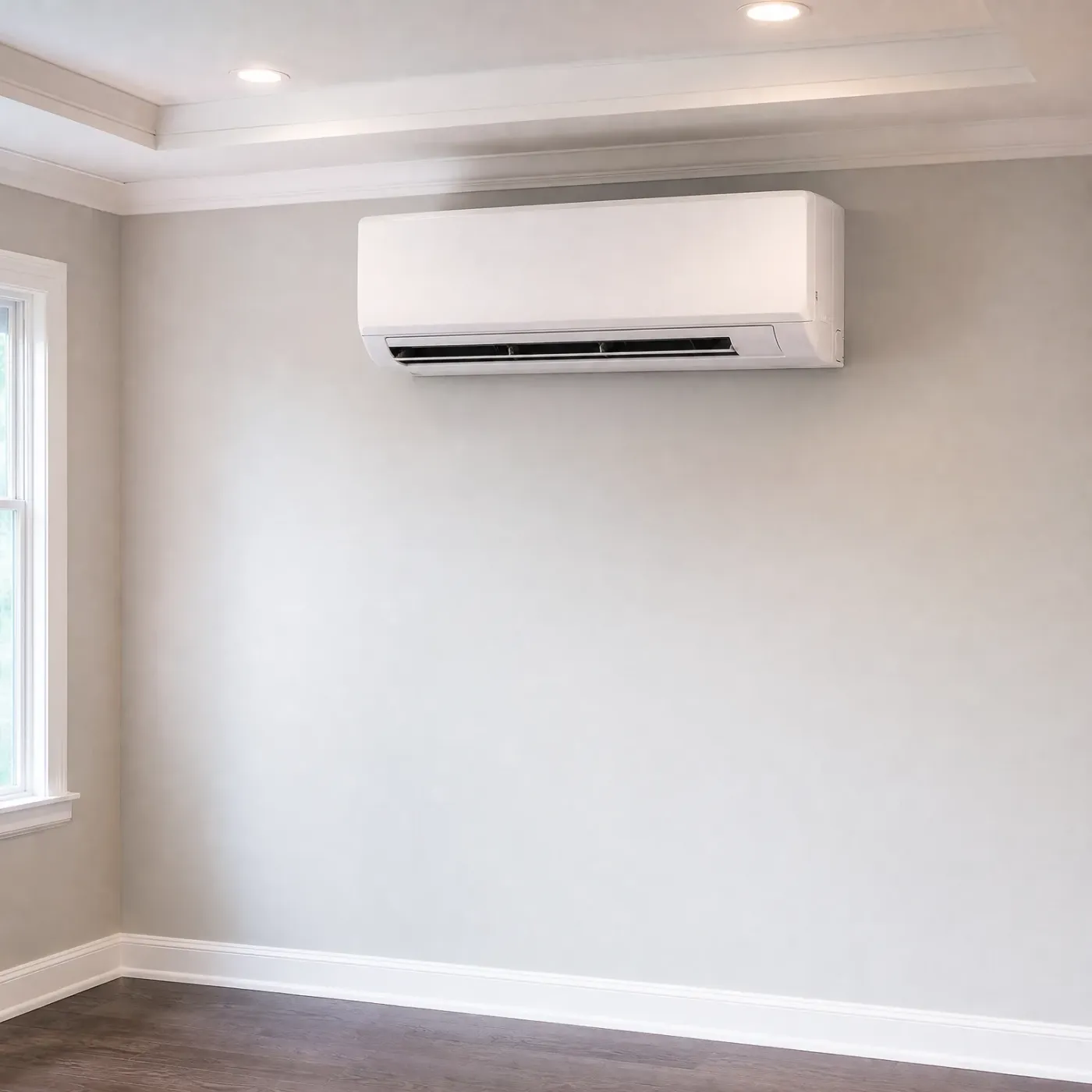
A white wall-mounted mini-split air conditioner on a light gray wall in an empty room with dark wood flooring, white baseboards, a tray ceiling with recessed lights, and a window at the left.
After you get your mini split repair

Power costs 31.35 cents per kilowatt-hour statewide

At 31.35 cents a kilowatt-hour, a mini split stuck blowing cold air isn't just uncomfortable, it's running up a bill without heating anything. If yours is the main source of heat in your house, every hour it cycles wrong costs more here than almost anywhere else.

EIA-861 2025 statewide residential average

What to do about it

  • A mini split blowing cold air in heat mode comes down to a wrong setting, a dirty filter, low refrigerant, or a stuck defrost cycle.
  • Checking the remote and the vents takes a minute and rules out the simplest causes before anything else.
  • A frozen outdoor coil or a short cycling pattern points to something a homeowner can't clear on their own.
  • A tech who works on these systems every winter has seen which part usually fails first in houses that heat this way.
  • Matching with one licensed contractor local to your area means one call back, not a handful of strangers competing for the job.
  • Left alone, the wrong mode or a failing part keeps drawing power without warming the house.

A mini split blowing cold air when it should be heating almost always traces back to one of four things: the mode setting, a dirty filter, refrigerant running low, or a defrost cycle that's stuck instead of clearing. The remote and the vents take a minute to check, and that minute rules out the easiest fixes before you call anyone. If the setting is right and the filter is clean but the air still runs cold, or the outdoor unit has ice built up that isn't going away on its own, that's not something to keep testing with towels and patience. It's a job for someone who opens these units up for a living. A tech who services mini splits every winter in your area has already seen which part tends to go first in homes that heat this way, because the pattern repeats season after season. That's who gets matched to your call, one licensed contractor local to where you live, not a list of names to sort through yourself. You explain what the unit's doing once, to one person, and they already know the usual suspects before they knock on the door. Left stuck in the wrong mode or cycling on a bad part, the unit keeps drawing power without putting any heat into the house, and that adds up fast on a bill already higher than most of the country pays. Getting it looked at stops that clock.

Kitchen corner with cream upper cabinets, oak lower cabinets, white marble-look countertop, beige tile backsplash, a ceramic vase of greenery, a wooden cutting board and bowl, and a black-framed window at right.
Interior corner of a room with a white-framed window and wide sill, beige walls with panel molding, a wooden cabinet holding a ceramic vase with a green leafy plant, and blurred shrubs and trees outside.
A wood-framed armchair with beige cushions and a woven lumbar pillow sits in a corner beside a large window overlooking green trees, with a tall ceramic vase holding leafy branches on the left and plaster walls and wood flooring.
Interior corner with a white-framed window above a sill, beige walls with baseboard molding, a greige shaker-style cabinet with brass knobs and a potted plant on top, light wood flooring and a woven jute rug.
A dark-framed six-pane window with white trim and sill set in gray horizontal lap siding, with hydrangea shrubs below and a white column and shingled roof section at left.

Hand off the search today

The pro who reaches out is licensed in California.

Reach a local pro

You're not committing to anything by asking.