



What a mini split tune-up covers in California

A white wall-mounted mini-split air conditioner indoor unit shown straight-on against a plain light gray background.
Skip the calls

A mini split tune-up covers cleaning the indoor filters and coil, checking the outdoor condenser coil and fan, clearing the condensate drain, checking refrigerant levels, and testing that the system cycles and controls properly. The indoor coil and filters collect dust and film over months of steady use, and a dirty coil makes the system work harder to move the same heat. In most of California that means long stretches of cooling without much humidity in the air, so the coil tends to gather dry dust rather than the sludge a humid climate leaves behind, but it still needs clearing. A clogged filter or coil forces the compressor to run longer for the same result, and with power costs here among the highest in the country, that shows up on your bill. The tune-up catches that before it becomes a bigger repair, and it is also when a contractor finds a weak capacitor or a low refrigerant charge while it is still a small fix.

A smiling woman with dark shoulder-length hair in a cream V-neck sweater sits at a marble counter with a glass of red wine, with a kitchen and softly lit living room behind her.
A woman in a dark green sweater laughs while seated at a marble kitchen island with a glass of red wine, with open shelving, cabinets and a living room visible behind her.
A woman with long dark hair in a cream knit sweater laughs while looking off to the side, seated at a counter with a glass of red wine, in a dimly lit living room with a sofa, lamp, framed pictures and houseplant behind her.
A smiling woman with long dark hair in a beige sweater sits at a marble kitchen counter with a glass of red wine, with a dimly lit living room behind her.

Why the filters matter most here

A mini split filter sits right behind the front cover of the indoor head, and most people can slide it out and rinse it themselves between visits. But the coil behind it is a different matter. Dust mixes with condensation on those fins and turns into a film that a filter rinse never touches. Once that film builds up, the head has to work harder to pull heat out of the air, and your power bill carries that cost all summer. A tune-up gets the coil itself, not just the part you can reach.

What the outdoor unit is doing

The condenser outside handles the part of the job the indoor head can't. Its coil and fan reject the heat pulled from inside your home, and both sit exposed to whatever blows through your yard: leaves, pollen, dust. When that outdoor coil is coated, the system can't shed heat as well, so it runs longer to hit the same temperature on the thermostat. Checking refrigerant levels at the same visit matters too, since a system low on charge strains the compressor even with a clean coil.

Power costs 31.35 cents per kilowatt-hour statewide

At 31.35 cents per kilowatt-hour, every bit of strain on your mini split shows up on the bill fast. A dirty coil or a weak filter makes the system run longer to hit the same temperature, and at that rate, the extra hours cost real money.

EIA-861 2025 statewide residential average

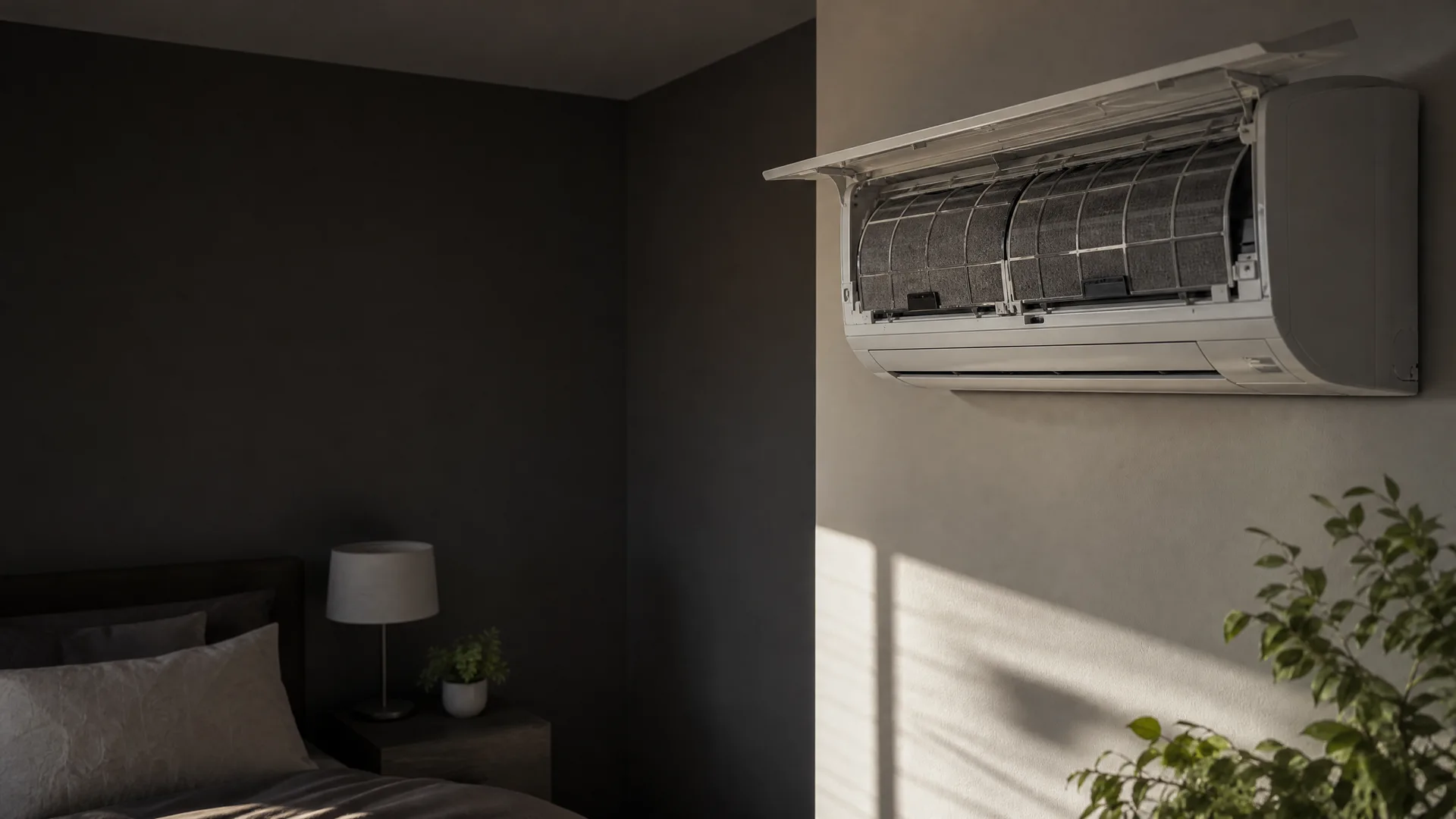
A wall-mounted mini-split air conditioner with its front cover open exposing the filters, in a dim bedroom with a bed, nightstand lamp and a potted plant.

You pull the cover off the indoor unit on a Saturday afternoon, sun coming through the bedroom window, and the filter screen is grey with dust. Not black, just dull and coated, the kind of dust that packs into the mesh instead of sitting on top of it. You slide it out and hold it up to the light and can barely see through it. Outside it's mild, the kind of spring day where you haven't needed the thing running hard in weeks, but you know summer is coming and this unit will be on most afternoons soon. You set the filter in the sink and make a note to check the coil behind it too, since it hasn't been looked at since the place was built.

Rinse It Yourself or Call It In

DIY tune-up

  • You can rinse the filter yourself and that part is genuinely easy to keep up with between visits.
  • You have no way to check refrigerant levels, since that requires gauges and a licensed hand to add or recover refrigerant.
  • The outdoor condenser coil and fan sit outside your reach for a real cleaning, and dirt there makes the whole system work harder.
  • You won't know if the condensate drain is actually clear until it backs up and starts dripping somewhere it shouldn't.
  • Nothing tells you whether the system is cycling and controlling temperature the way it's supposed to, since that takes testing, not a glance.
  • You save a visit, but you're guessing at the parts of the system that actually drive your power bill up when they're off.

Licensed tune-up

  • A contractor who works on mini splits all season knows which models in your area tend to clog first and where to look.
  • The indoor coil gets cleaned properly, not just the filter in front of it, which is the part you can't do yourself.
  • Refrigerant levels get checked with gauges, so a slow leak gets caught before it costs you in run time.
  • One contractor handles the whole visit, so you're not explaining your system's history to three different companies before picking one.
  • The outdoor unit gets opened up and the coil and fan get cleaned, which matters since that's where the system dumps heat.
  • You skip calling around and comparing quotes, since the contractor who shows up is already matched to your equipment and your area.
Single-story house with tan horizontal siding and a dark shingled hip roof, fronted by a patchy green and brown lawn and a concrete walkway leading to the covered entry.

Summer air here holds less moisture than most of the country, with the dew point around 50°F across June, July and August, according to NOAA climate normals. That changes what your mini split spends its effort on. In muggier states, the system pulls a lot of water out of the air just to feel comfortable. Here it's mostly moving heat, not wringing out humidity, so a clean coil and a clear filter matter even more. There's less moisture load to mask a problem, which means a dirty coil shows up sooner as warm air from the vents or a room that won't quite cool down. Instead of spending evenings calling around to find someone who knows mini splits, explaining the same issue to each one, and comparing quotes, you can get matched with a local contractor who services this equipment all season and already knows what tends to go wrong in dry summer heat.

NASA POWER T2MDEW county cells weighted by homes

Skip calling around

A licensed local pro takes the request for your mini split tune-up.

You only hire the pro if you want to.

What the technician actually checks

  • A technician checks refrigerant pressure at the service port with gauges, not by looking at the coil or feeling the air.
  • Low refrigerant almost always means a leak somewhere in the line set, and adding charge without finding it just delays the same call.
  • The outdoor unit's fan motor and the coil fins behind it get checked for bent fins and debris, since restricted airflow there makes the compressor work harder.
  • Electrical connections at the outdoor unit get tightened and checked, since loose connections are a common cause of a system that trips out mid-cycle.
  • The indoor head's blower wheel gets inspected for the buildup that doesn't rinse out with the filter, which throws dust back into the room even with a clean filter.
  • The technician runs the system through heating and cooling modes to confirm the thermostat signal reaches the outdoor unit and the system responds correctly.

A mini split tune-up is partly visual and partly measured, and the measured part is what you can't do yourself. Refrigerant gets checked with gauges at the service port, a reading that tells the technician whether the charge matches what the system was built to run. If it's low, that's not something that fixes itself or something a top-off solves for good. Refrigerant doesn't get used up. Low charge means it's leaking out somewhere along the line set that runs between the indoor head and the outdoor unit, and finding that spot is part of the job, not an extra step.

Outside, the fan motor and the coil behind it get a look for bent fins and leaves or debris pressed into the fins, since air has to move through that coil freely or the compressor behind it works harder to do the same job. Electrical connections at the outdoor unit get checked and tightened, since a loose connection is a common reason a system trips off partway through a cycle for no obvious reason.

Inside, the blower wheel behind the filter gets inspected. Filters catch dust, but the wheel itself collects a film over time that the filter never touches, and that film throws dust back into the room no matter how clean the filter is. Last, the technician runs the system in both heating and cooling to confirm the thermostat signal actually reaches the outdoor unit and the system responds the way it should.

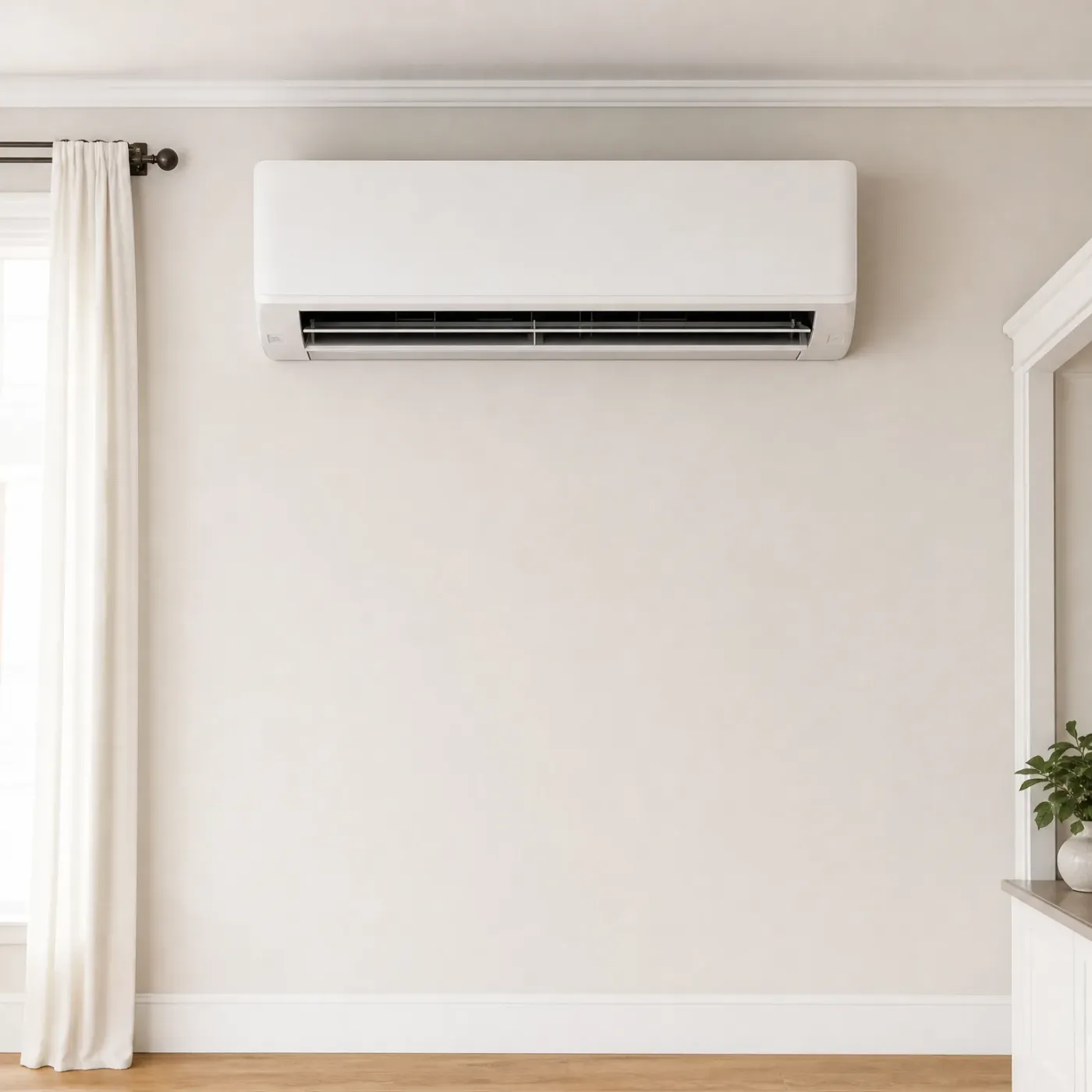
A white wall-mounted mini-split air conditioner on a beige interior wall, with a cream curtain and window at left, a potted plant on a ledge at right, and a wood floor below.
A clean mini split like this one moves air without a fight, and the fan and coil stay free to do their job.
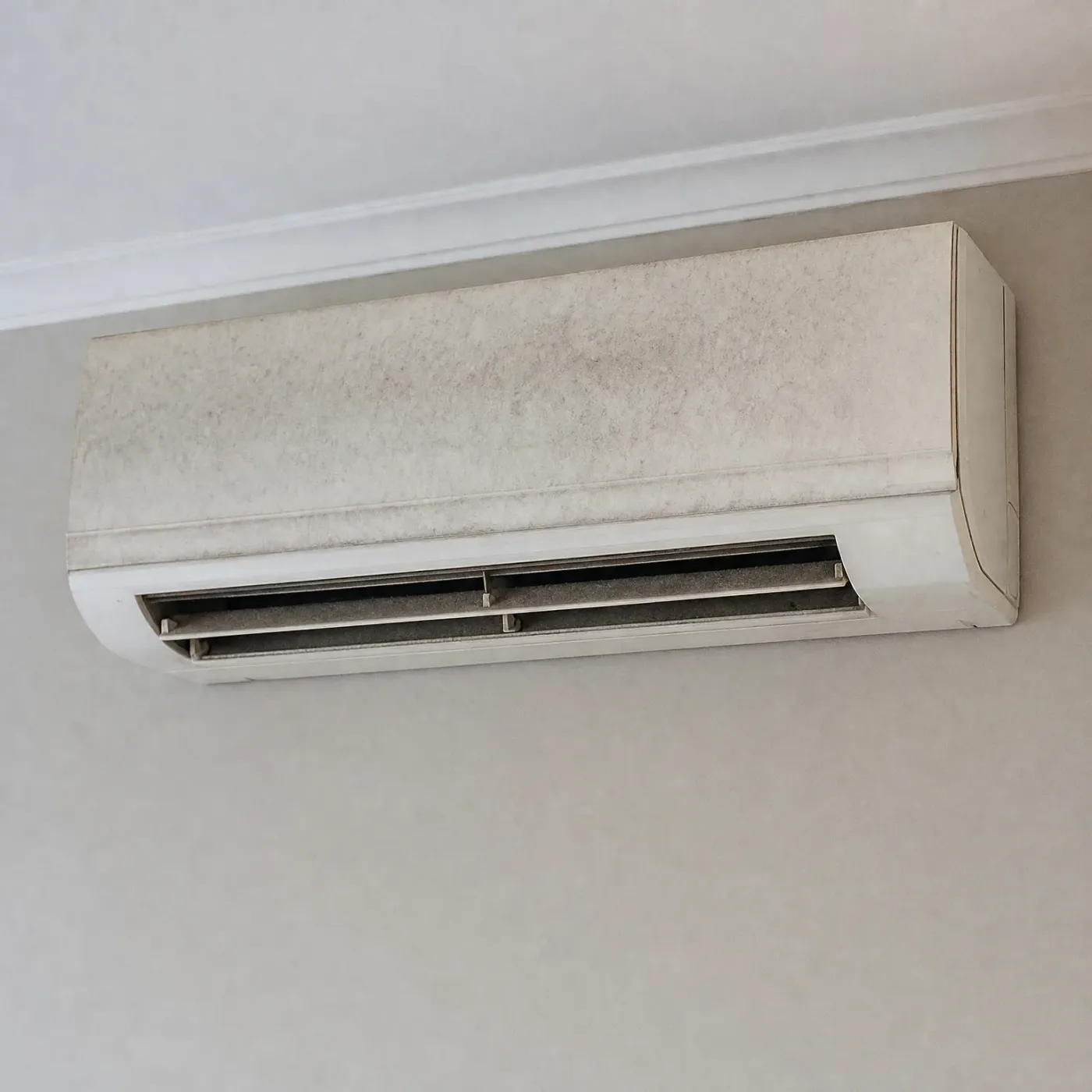
A dusty, discolored white wall-mounted mini-split air conditioner unit installed high on a plain interior wall below a white ceiling molding.
A coat of dust like this traps heat in the coil and makes the unit run longer to cool the same room.

A lot of what matters in a tune-up happens where you can't see it. The blower wheel sits behind a panel on the indoor head, and dust builds up on its blades even after the filter and coil are clean, slowing airflow without any sign on the front cover. Outside, the condenser fan motor has bearings that wear down over years of running, and a motor starting to fail makes the compressor pull harder to move the same air. Where the line set passes through the wall, the insulation around it matters too. A gap there lets outside heat reach the refrigerant line before it ever gets to the coil. Inside the disconnect box, connections work loose over time, and a loose lug can cause shutdowns that look like a bad thermostat. A full cycle test, run through both heating and cooling rather than a quick power check, catches a control board that only fails once it's under load. And the condensate line gets checked for more than a clear path. If there's a pump, it has to still be lifting water, not just sitting there.

What a technician actually checks

  • A technician pulls the blower wheel panel on the indoor head to check for dust buildup that a filter and coil cleaning alone won't reach.
  • The outdoor condenser fan motor gets checked for bearing wear, since a failing motor makes the compressor work harder without any obvious sign indoors.
  • Line set insulation gets inspected at the wall penetration, because gaps there let heat into the refrigerant line and waste the compressor's work.
  • The tune-up includes checking the electrical connections at the disconnect box outside, since loose lugs cause intermittent shutdowns that look like a thermostat problem.
  • A technician tests the system across a full heating and cooling cycle, not just a quick power-on, to catch a control board that only fails under load.
  • Drain pan and condensate line checks include verifying the pump or gravity slope still clears water, since a clogged line backs up into the indoor unit.
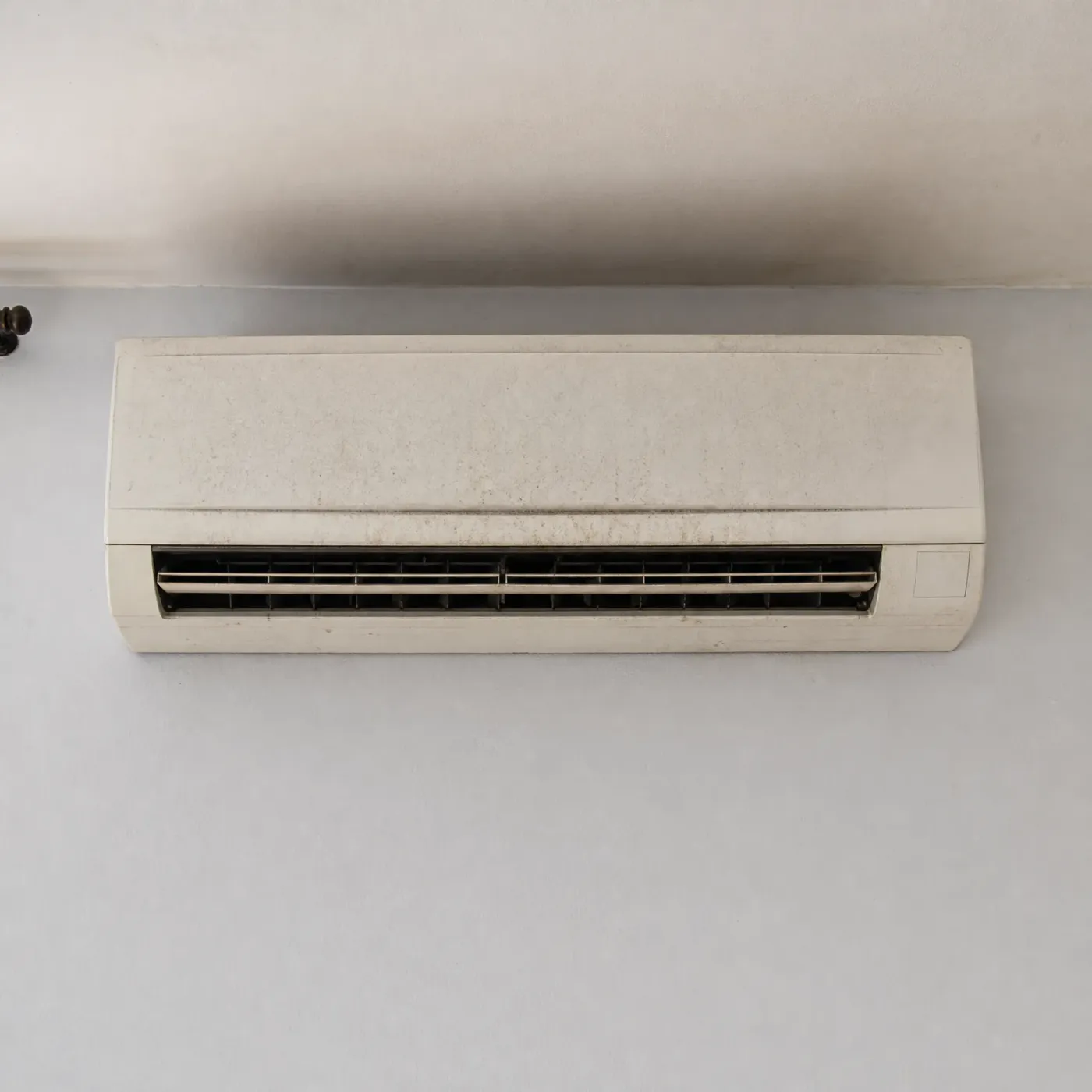
A dusty beige wall-mounted mini-split air conditioner indoor unit installed high on a plain light-colored wall below the ceiling.
Before you get your mini split maintenance
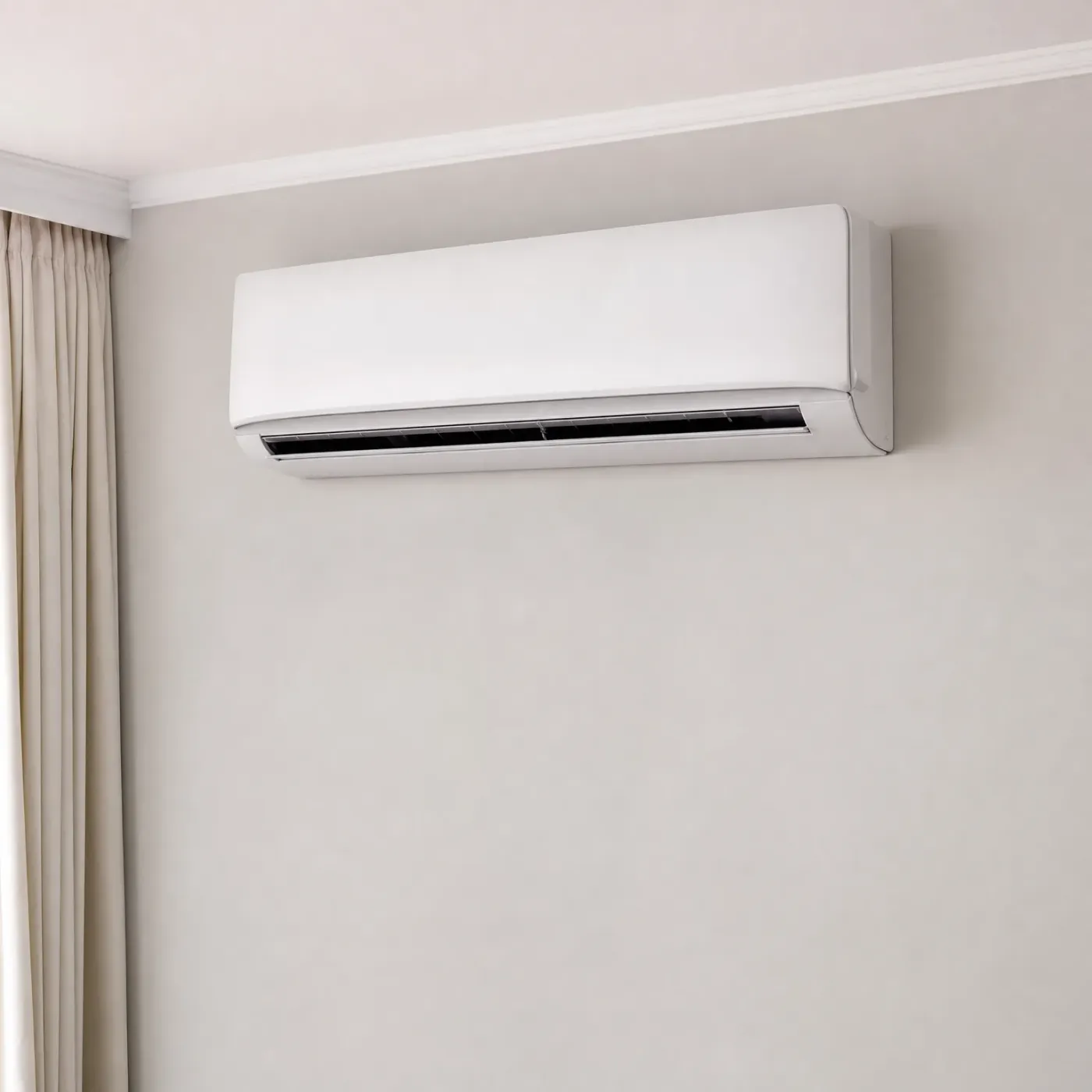
A white wall-mounted mini-split air conditioner near the ceiling of a room with light gray walls, white crown molding, and a beige curtain at the left edge.
After you get your mini split maintenance
  1. Technician shuts power to both the indoor head and outdoor unit

  2. Indoor filters come out first for a rinse or replacement

  3. Indoor coil gets cleaned with a brush or coil cleaner

  4. Condensate drain line is cleared so water flows out freely

A closed laptop and a cream mug of coffee on a coaster sit on a dark wooden table, with a potted plant at left and a kitchen counter, tiled backsplash and shelf of ceramics in the background.

What a mini split tune-up covers, in short

A tune-up covers the filters, the indoor coil, the outdoor condenser and fan, the condensate drain, and the refrigerant charge. Each one has a job, and a technician checks all of them in a single visit rather than guessing which part is causing trouble.

Finding that technician is its own chore. You could spend an evening searching, calling a few companies, explaining the same symptoms to each one, then sitting with quotes that don't quite match because nobody looked at the same unit. A local contractor who services mini splits through every California summer already knows what tends to fail first in this climate and what doesn't. You explain it once, to one licensed contractor, and the rest of the evening is yours again.

A living room corner with a beige upholstered armchair holding navy and striped cushions, a small round wooden side table with a carved bowl and a potted green plant, a framed landscape picture on a pale wall, built-in shelving, and a curtained window.
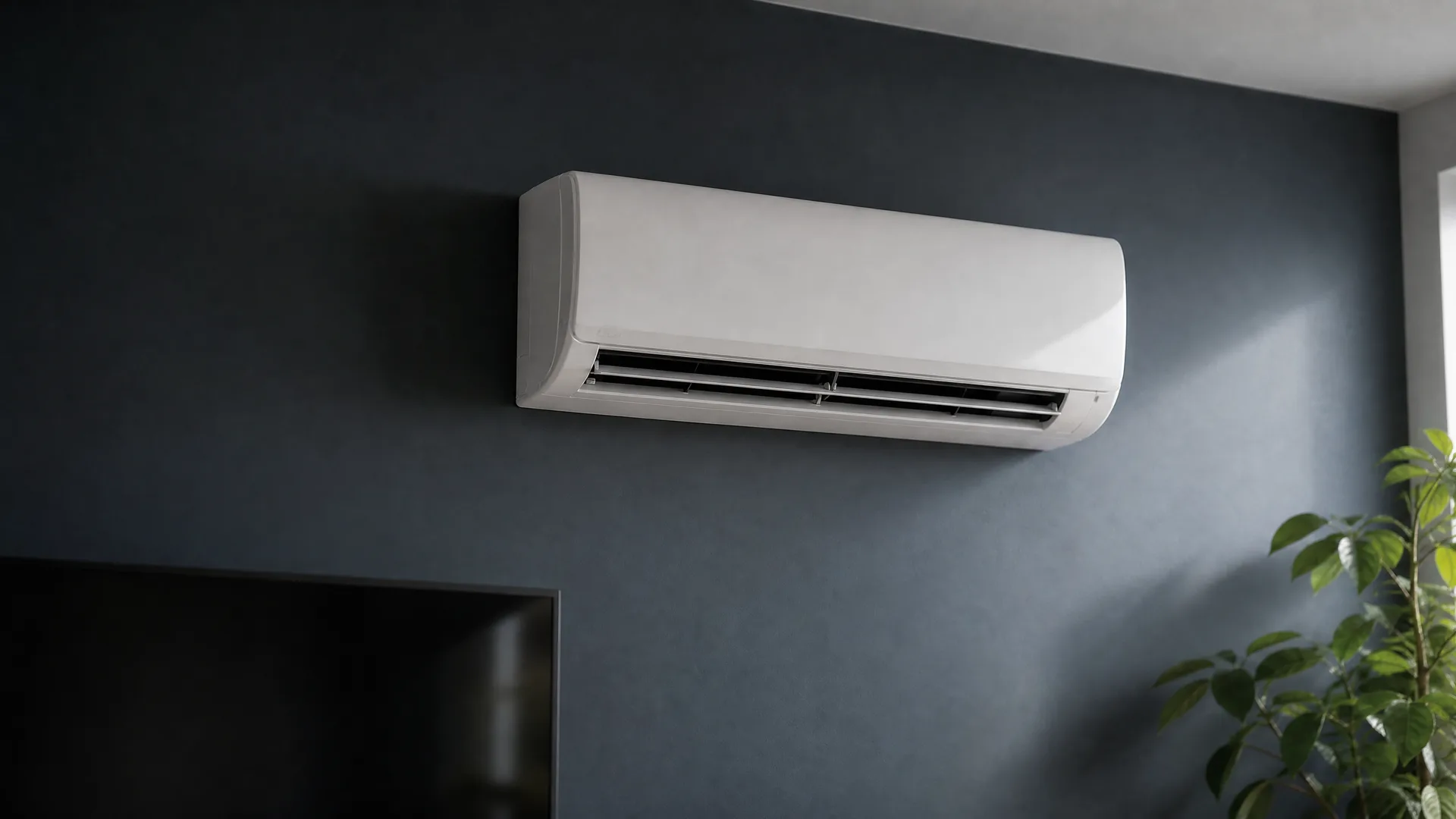
A white wall-mounted mini-split air conditioner on a dark gray interior wall, with a flat screen at lower left and a green leafy plant at lower right.

Describe it once

Step 1 of 3: Equipment