Tell us about the job
Takes about a minute. No obligation.
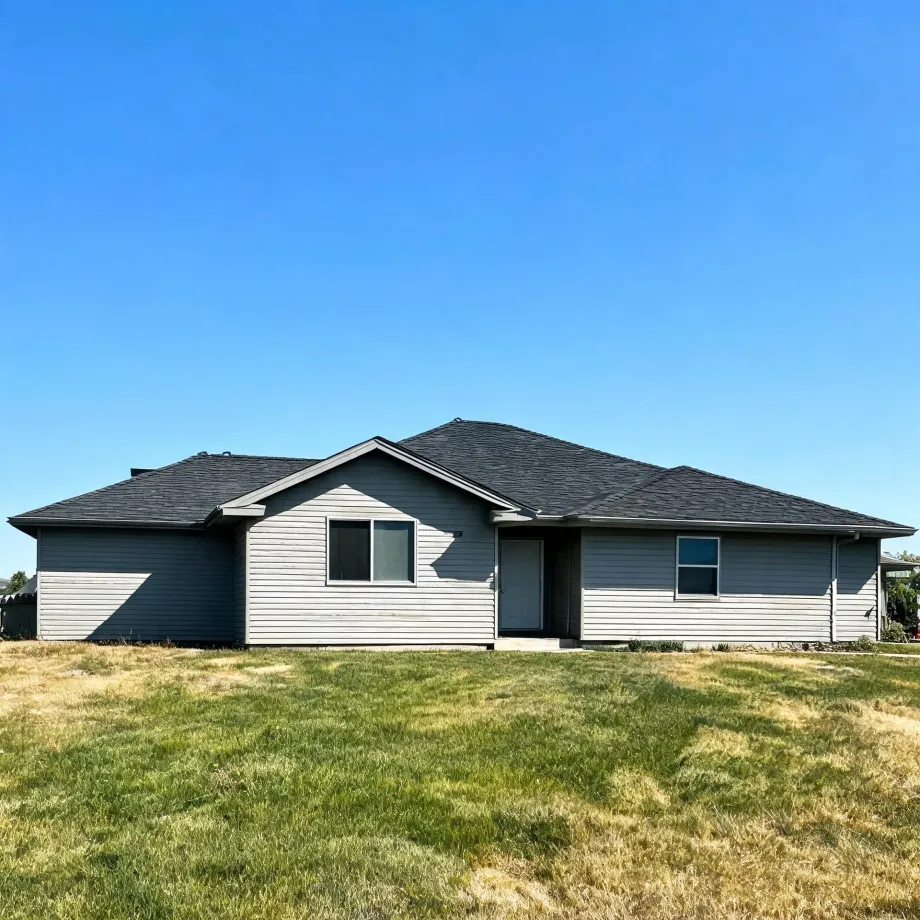
A mini-split compressor in this area cycles repeatedly across a full cooling season, starting and stopping through the heat of summer until the outdoor unit is finally shut down in the fall. Homes in Stanislaus County, CA run cooling about four months a year, from June through September. That compressor work loads the contactor, stresses the refrigerant circuit, and leaves wear the contractor can measure. A technician diagnosing a fault here checks compressor amp draw and refrigerant pressure first, because those are the components the season loads hardest.
Half the homes in Stanislaus County, California were built in 1981 or earlier (2020-2024 ACS 5-year). A mini-split running in a house from that era sits on top of layers of prior work: original wiring sized for something else, refrigerant lines rerouted at least once, and mounting surfaces that were never cut for what is there now. When a contractor opens the unit, what they find often reflects those accumulated changes as much as the equipment's own service history. A failed capacitor or a refrigerant leak is straightforward to price; wiring that has been spliced to meet a different load is a different conversation with a different parts list.
The Parts of a Mini-split a Contractor Checks First
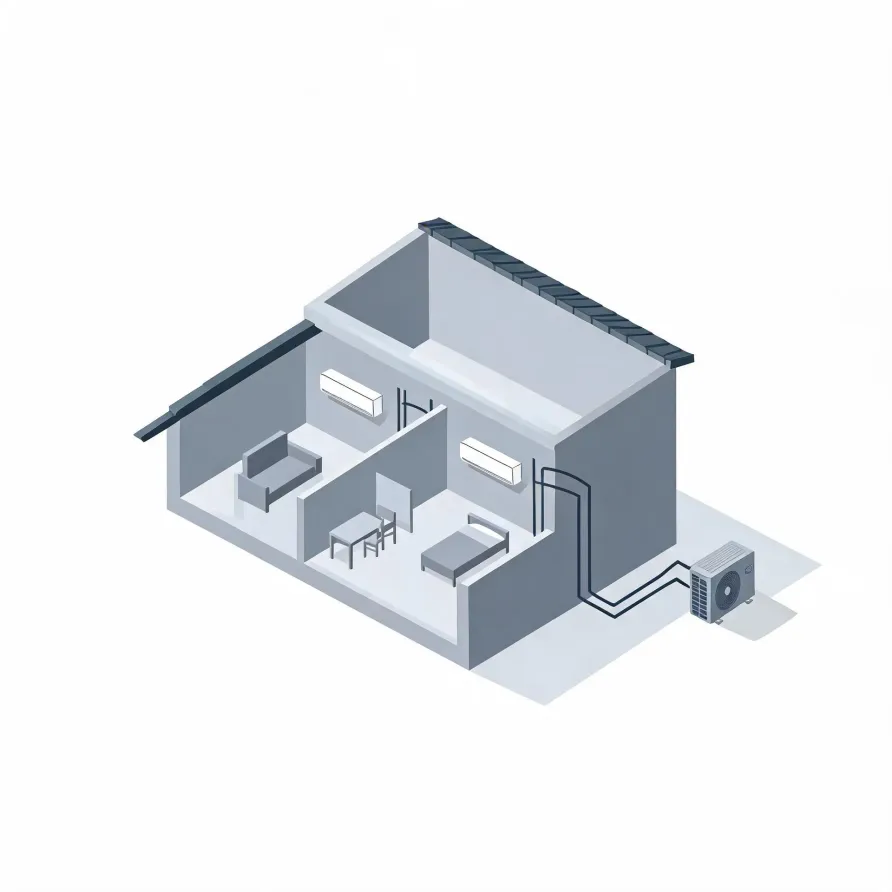
The indoor air handler mounts high on an interior wall and is where most visible problems show up first: weak airflow, ice on the unit, or no response from the controls. Inside it sit the evaporator coil, the blower fan, and the expansion valve, any of which can be the source of a fault. The coil and the blower draw attention early because both affect whether the unit moves air at all.
Outside, the condenser unit houses the compressor and the condenser coil. The compressor is the part contractors go to when the system runs but produces no change in room temperature. The refrigerant line set and the condensate drain line run between the two units, and either can be the point of failure when symptoms do not point cleanly to one component.
The drawing shows a typical mini-split layout, and a licensed contractor determines which parts apply and what condition they are in for this particular house.
Get matched in Stanislaus CountyStanislaus County, by the numbers
24 severe weather events were recorded in Stanislaus County, California between 2015 and 2024.
NOAA National Centers for Environmental Information, Storm Events Database, bulk CSV export, events 2015-01-01 through 2024-12-31.Half the homes in Stanislaus County, California were built in 1981 or earlier (2020-2024 ACS 5-year).
U.S. Census Bureau, 2020-2024 American Community Survey 5-Year EstimatesStanislaus County, California holds 185,149 housing units (2020-2024 ACS 5-year).
U.S. Census Bureau, 2020-2024 American Community Survey 5-Year EstimatesOwners occupy 61.2% of the occupied homes in Stanislaus County, California (2020-2024 ACS 5-year).
U.S. Census Bureau, 2020-2024 American Community Survey 5-Year EstimatesMini-Split Repair Rules & Standards for Stanislaus County, California1 sourced regulations and codes
Licensing and Legal Requirements in Stanislaus County, California
California requires a state contractor license: it is a misdemeanour to engage in the business of, or act in the capacity of, a contractor in California without one, unless the work is exempt.
Severe Weather Events in Stanislaus County
Extreme weather puts real stress on mini-split systems, and how much stress depends on what a local climate actually delivers. Repair needs in Stanislaus County are shaped by local conditions, and that record is worth seeing before any work begins.
24 severe weather events, 2015–2024. Source: NOAA National Centers for Environmental Information, Storm Events Database.